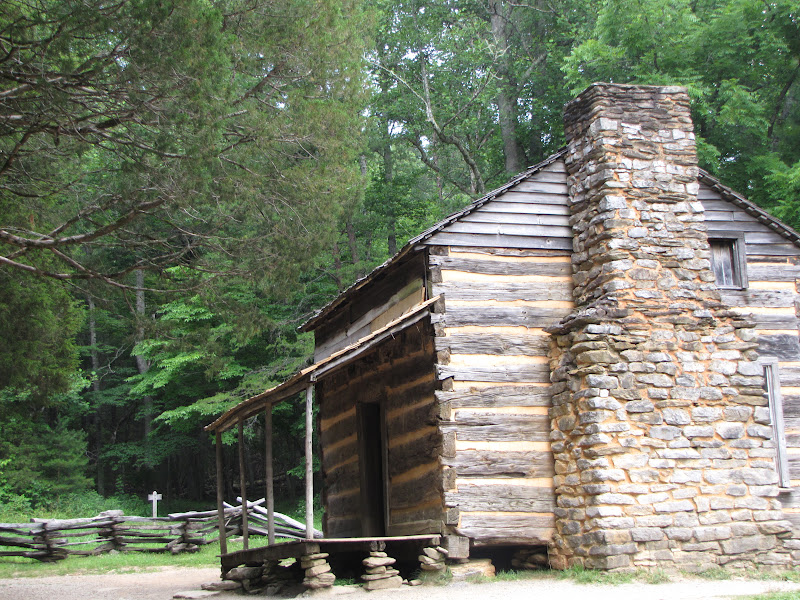
John Oliver Cabin


The John Oliver Cabin in Cades Cove is the typical mountain cabin: made from logs with a fireplace and a sleeping area in the attic.  John and his wife were some of the first white settlers to the area, and would have starved the first winter without help from the Cherokee who lived there.  The couple had nine children (two died as infants) and raised them in this cabin.
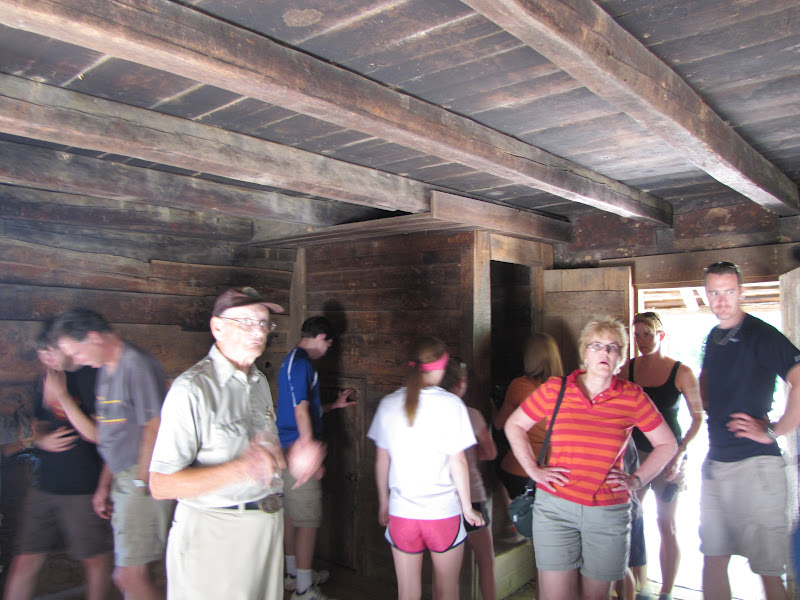


The very knowledgeable volunteer ranger counted off nine of us in the small area (the whole house was smaller than our living room) and asked us to imagine living there.  He explained that the cabin was for sleeping and storage; everything else was done outside. And who wouldn't want to stay outside, when your front yard looks like this?


One of the ladies in the crowd asked the ranger, "How in the world did they have that many children in this crowded cabin with no privacy?"

The ranger sheepishly smiled and said, "Pretty much the same way we do it today."

Comments

  1. Loved the photos and the post : )

    ReplyDelete
  2. Wanda,
    Wow! Your blog is wonderful. I'm so glad I found it. I really enjoyed this posting about the log cabin very much. What an interesting history. You sure did a great job capturing the "good old day."

    ReplyDelete
    Replies
    1. Thank you so much for reading my blog and your comment, Brenda. I love log cabins. My husband says I wouldn't make it a month in one, but I would like to try! :)

      Delete
  3. I keep telling Popa I want a log cabin; he says he can't leave his shop :( I just love the picture you've posted, and the story behind it all.

    ReplyDelete
    Replies
    1. I would love one; hopefully, a little bit bigger than this one! :)

      Delete

Post a Comment

Popular posts from this blog

100 miles or less: Rattlesnake Saloon

The Rattlesnake Saloon was opened on Labor Day, 2009.  Dining there is an unique experience. It is way out in the boonies in Colbert County, Alabama.  It is hard to get to, even for locals, but they have had visitors from all over the United States and many countries throughout the world. Sitting comfortably under the huge rock overhang, I couldn't help but think about the people who have sought shelter there from storms or heat.  I can imagine the Native Americans using this place for a meeting area or a dry place to camp for a while.  Not so many years ago, it was used as a pig pen. They have good food and live music and a hitching post if you want to ride your horse there.  Most of us were picked up in a pickup, called the "Saloon Taxi", that runs from the parking lot to the restaurant continuously while they are open. The Rattlesnake Saloon is aptly named.  During construction, workers unearthed a mother rattler with twelve babie...

Amish in Stantonville, Tennessee

Last week, my sis and her hub went with us to the Amish community near Stantonville, Tennessee.  It was a beautiful day, and we love driving to new places and finding new treasures.  We enjoy these mini-trips we take together, where we giggle a lot and get caught up on everything.  Also, the squirrels ate all our tomatoes, so we needed to find some to buy. You know the food you are buying is fresh when they bring it from the field while you are standing there waiting for it. Here is part of what we brought home, and it was all delicious. Stantonville is located in McNairy County, Tennessee, northwest of Shiloh National Military Park.

Old Water Tower in Florence, Alabama

So, we have lived in Florence since 1986 and I didn't see this old water tower until last week.  Shame on me.   It is located on Seymore Street, in a residential neighborhood in Florence. Listed on the National Register of Historic Places, this tower of native stone was completed in 1890 as the foundation for a wrought- iron tank with a capacity of 280,000 gallons of water. It is 70 feet high and is located on the highest elevation in the city. Water was pumped here from Cypress Creek. It was constructed during the Industrial Boom at which time the population of Florence increased from approximately 2,000 in 1887 to over 6,000 in 1889. It was replaced by the adjoining standpipe in 1935.   (from historical marker on site.)   I'm sure there was lots of planning, lots of discussion about funding, and lots of joy when this water tower was completed.  Not one person who was there to celebrate its completion is alive today, but the water...